

Awards & Recognitions
Michael Soloff and Ted Dane of Munger, Tolles & Olson, honored by the Homelessness Prevention Law Project
April 20, 2023


Munger, Tolles & Olson partner Michael Soloff is a recipient of the Public Counsel’s 2021 Pro Bono Award.
Public Counsel, the world’s largest pro bono public interest law firm, said “the award recipients’ tireless dedication to its clients epitomize the life-changing legal work its volunteers handle daily.”
Messrs. Soloff and Dane volunteered their legal expertise to help tenants and were honored by Public Counsel’s Homelessness Prevention Law Project which serves people at risk of becoming chronically homeless. Their legal expertise helped families at risk of being homeless to stay in their homes during the pandemic.
Contributing to the community through pro bono work and other forms of volunteerism is a core tenet of the culture at Munger Tolles. The firm encourages its attorneys to choose pro bono matters that they care about deeply and its lawyers have made an impact on many social issues through pro bono advocacy, including veterans rights, civil liberties, affordable housing and LGBT rights, among others.
Groundbreaking legal results — amid boundless complexity — often delivered in ways not imagined possible.
Remarkable results. Remarkable talent.
Groundbreaking legal results — amid boundless complexity — often delivered in ways not imagined possible.
Find a LawyerElite talent at every level of our firm, which leads to better client care and outcomes.
One-of-a-kind culture that delivers more empowerment, inclusion and impact.

Notable achievements.
2026 Daily Journal CLAY Award
Munger, Tolles & Olson is proud to have been recognized with a 2026 California Lawyer Attorneys of the Year (CLAY) Award by the Daily Journal. MTO was recognized for its leadership in filing amicus briefs in support of challenges to Executive Orders issued by the Trump administration in 2025.


MTO at a glance
200+ lawyers across
3 offices
75% of attorneys clerked for federal or state judges
15 former U.S. Supreme Court clerks
#1 ranking on The American Lawyer A-List a record 11 times
#5 ranking on The American Lawyer Pro Bono Scorecard
#1 Most Selective Law Firm as ranked by Vault

News & Insights
Awards & Recognitions
Ashley Aull Named to the Daily Journal’s 2026 Top Women Lawyers List
News & Insights
Client Win
Veterans Rights Activist Returns to U.S. Legally Nearly 20 Years After Deportation
January 19, 2022
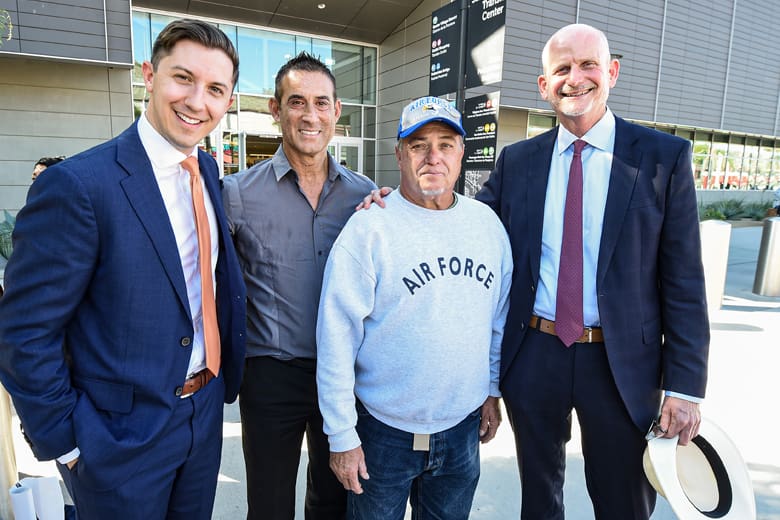
A veterans rights activist and father of an active-duty U.S. military member crossed the border from Mexico into California on Veterans Day, November 11, reuniting with his family after a legal battle that lasted nearly two decades.
Robert Vivar, director of the Unified U.S. Deported Veterans Resource Center, returned to San Diego after crossing the San Ysidro border. His re-entry follows a victory on his behalf by prominent law firm Munger, Tolles & Olson before the California Supreme Court earlier this year.
“This is a great day for Robert and a great day for our system of justice,” said Joseph Lee, one of Vivar’s attorneys and a partner at Munger, Tolles & Olson. “Robert never lost hope, and we are very proud to have helped ensure that the rule of law prevailed at last.”
In 2002, Vivar entered a guilty plea and his then-counsel did not properly advise him that immigration consequences of that plea would result in his deportation to Mexico, a country he left at age six.
Vivar spent years unsuccessfully fighting to undo this result in the courts until the California Legislature enacted a new law, Penal Code section 1473.7, permitting non-citizens to challenge old, unlawful convictions based on guilty pleas with unanticipated immigration consequences. Represented by Munger Tolles, Vivar filed a motion to vacate his 2002 conviction under this statute, arguing that he received ineffective assistance of counsel. The trial court denied Vivar’s motion and the Court of Appeal affirmed, concluding that while prior counsel had failed to offer Vivar competent advice about the immigration consequences, Vivar failed to demonstrate any prejudice from the error.
The California Supreme Court granted review and, in an precedent-setting victory that will affect all non-citizen criminal defendants in California facing immigration risk, the state’s highest court reversed the lower court’s ruling. Finding that Vivar was prejudiced by his counsel’s error, the Court instructed the lower court to vacate Vivar’s conviction. The state Supreme Court’s opinion clarifies key points relating to motions to vacate criminal convictions by non-citizen defendants based on ineffective assistance of counsel, and the appellate standard of review applicable to those motions. A group of organizations and individuals weighed in to encourage the high court to rule in Vivar’s favor, including ACLU, the Immigrant Resource Legal Center, and a group of former district attorneys and public defenders.
Vivar has been living in Tijuana, where he is co-director of Unified U.S. Deported Veterans, which is located just a few yards from the Ped West International Border crossing and deportation area, and serves as the frontline of interception for U.S. military veterans who are deported. The organization helps them integrate into the community as productive residents while exploring all legal options to return legally to the U.S.
Vivar is also the Mexico coordinator of Military Families Speak Out. His son is in the California National Guard and his grandson is an active duty Marine.
The Munger Tolles team that represented Vivar before the California Supreme Court includes Joseph Lee, Dane Shikman, and David Freenock, with support from Ben Horwich.
Dane Shikman, who argued the case and led the briefing in the California Supreme Court, has stated: “Robert’s return to his family after years in exile is a testament to the tireless efforts of public officials, immigrant and veteran rights organizations, and dedicated lawyers at our firm who have fought for him along the way. But the only reason these groups have assembled for him is because he has been singularly committed to justice for immigrants and veterans, and through his national leadership and the force of his spirit, he has built a loyal coalition of supporters who are finally able to bring him and his family the justice that he has brought to so many others while stranded away from home. Robert, it has been a long time coming my friend, but welcome home.”
Assemblywoman Lorena Gonzalez commented: “Today, we are bringing home a deported veterans rights advocate and reuniting him with his family at last. I am overjoyed to hear that Robert will finally be able to return home to the country he calls home, now that his conviction has been vacated by the CA Supreme Court. The path to this decision was paved by our Assembly Bill 813, which provides a means for people to challenge convictions that lead to inappropriate deportations, ripping them away from their loved ones.”
For photographs, interviews and additional information please contact press@mto.com.
About Munger, Tolles & Olson LLP:
Munger, Tolles & Olson is one of the foremost contributors to the efforts by legal communities in Los Angeles, San Francisco and Washington D.C. to fill the advocacy gap for members of vulnerable populations who are seeking immigration relief.

Client Win
Immigrants’ Rights Protected After Court Rules ICE’s “Knock and Arrests” Are Unconstitutional
May 17, 2024
Munger, Tolles & Olson, in partnership with the ACLU Foundation of Southern California and the UC Irvine School of Law Immigrant Rights Clinic, achieved a landmark victory for immigrants’ rights when a federal court ruled that the use of so-called “knock and talks” by U.S. Immigration and Customs Enforcement (ICE) for the purpose of arresting individuals is unlawful and unconstitutional.
In his written ruling, U.S. District Judge Otis D. Wright II explains that the “knock-and-talk” practice, as defined by the U.S. Supreme Court, is permissible under the Fourth Amendment, but the way ICE defines and carries out this practice is not. Although the Fourth Amendment generally permits ICE officers to approach a home without a warrant merely to speak with a resident, ICE unlawfully uses “knock and talks” for the purpose of arrest. The Court’s order holds that the Constitution prohibits ICE officers from approaching a home and encroaching upon the home’s curtilage—the constitutionally protected areas around a home—“with the intent to arrest.” “Considering the policies and practices governing how ICE conducts its ‘knock and talks,’ the more accurate title for certain law enforcement operations would be ‘knock and arrests,’” according to the Court.
In this class action lawsuit filed in April 2020, Kidd v Mayorkas, MTO and co-counsel challenged ICE’s deceptive home arrest practices in Los Angeles and the surrounding region. The lawsuit was filed on behalf of two community organizations, the Inland Coalition for Immigrant Justice (ICIJ) and the Coalition for Humane Immigrant Rights (CHIRLA) and an individual, Osny Sorto-Vasquez Kidd. Agreeing with a persuasive motion for summary judgment filed by MTO and co-counsel, Judge Wright vacated the unconstitutional “knock and talk” practice on May 15, 2024. The order vacating the “knock and talk” practice applies to ICE’s Los Angeles Field Office, which covers Los Angeles, Orange, San Bernardino, Riverside, Ventura, Santa Barbara and San Luis Obispo counties.
Following the ruling, MTO attorney Giovanni Saarman González said that “this significant legal victory further clarifies the law around the permissible use of ‘knock and talks.’ The order will curb ICE’s deceptive ‘knock and arrest’ practices and provide meaningful relief to the class and the broader Southern California community. We are thrilled with this result and humbled by the opportunity to participate in this effort to hold ICE accountable.”
The MTO team included Jake Kreilkamp, Giovanni Saarman González, Gabriel Bronshteyn and Joey Glynn.
Read the press release from the ACLU.
The case garnered media coverage in the Los Angeles Times, Law360 and other publications.
About MTO’s Pro Bono Practice
Contributing to the community through pro bono work and other forms of volunteerism is a core tenet of the culture at Munger, Tolles & Olson. The firm was one of the charter signatories to the American Bar Association’s pro bono challenge and consistently devotes more than three percent of all attorney time to delivering needed pro bono legal assistance. We are proud to be one of the select group of firms to have received the ABA’s coveted Pro Bono Publico Award.

Fall 2024
Alumni Network Newsletter
Stay ConnectedA Welcome Message from Co-Managing Partners Hailyn Chen and Malcolm Heinicke

We are delighted to reconnect with each of you through this fall edition of our alumni newsletter. Munger, Tolles & Olson is thriving, and we are proud to celebrate the achievements of our remarkable and talented alumni and current lawyers.
In this issue, we spotlight three distinguished MTO alumni: the Honorable Carl H. Moor, associate justice to the California Court of Appeal, Second District; Amy Tovar, senior vice president and general counsel for the San Francisco Giants; and Caroline Cunningham, vice president, associate general counsel (product and commercial) at Lyft.
The firm’s Alumni Lunch Series continues to provide a wonderful way for our alums to connect with the firm and share their post-MTO adventures and accomplishments. Just recently, we were fortunate to welcome six MTO alumni whose post-firm careers have spanned a wide range of roles, from in-house counsel and federal public defender to CEO and more. We will be announcing our 2025 speakers soon, and we hope you will join us virtually to hear from them.
In this edition, we also highlight the careers of two retired MTO partners: Bob Johnson and Martin Bern. They each called the firm home for more than 30 years and built impressive and varied careers. We are grateful for their contributions to MTO and its clients.
And finally, we share some of the firm’s recent case victories, transactions and award wins.
In short, we recognize and celebrate the role that you all played and continue to play in this success and our overall enterprise. Thank you for staying engaged with our alumni community. If there is anything that we can do for any of you, please let us know.
All the best,
Hailyn Chen and Malcolm Heinicke
Co-Managing Partners

Alumni Spotlight
Over the course of their careers, our MTO alumni have collected incredible insights and stories to share. In this series, read interviews from those who have called MTO home throughout the years and contributed to the firm’s rich history.
Interview of
Carl H. Moor
Associate Justice of the California Court of Appeal, Second Appellate District
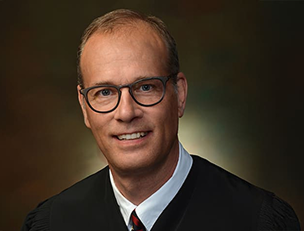
California Court of Appeal, Second District Associate Justice Carl H. Moor first worked at Munger, Tolles & Olson as a summer associate while attending Yale Law School. He served as a law clerk to the Hon. Mariana R. Pfaelzer in the U.S. District Court for the Central District of California before practicing for five years at Hall & Phillips. He was an assistant U.S. attorney in the Central District for a total of six years over two periods, broken up by a stint as in-house litigation counsel at NBC Inc. Justice Moor joined MTO in 2001 and was appointed to the Los Angeles Superior Court by Gov. Jerry Brown in 2013 and to the Court of Appeal in 2018.
Retired MTO Partner Jeffrey I. Weinberger recently spoke with Justice Moor about his legal career.
Justice Moor, you have had one of the most varied legal careers I’ve ever seen. Was that kind of serendipity, or was it planned?
It certainly wasn’t planned. I don’t think when I entered the legal profession I had really any idea where it would lead. For example, I remember my second year of law school, when I was interviewing with MTO for a summer position, I was very adamant that I was going to be a transactional lawyer. It took me about five minutes after I got there to think, “OK, that’s not me at all.” And then I ended up moving toward litigation.
When I was clerking for Judge Pfaelzer, I got to spend time in the courtroom, and I just became fascinated with the criminal trials. The reason I ended up at [the public interest law firm] Hall & Phillips was that Claire Silvia, who had been an MTO summer associate along with me in the summer of 1986 and had clerked for Judge Pfaelzer the year before I did, was there and encouraged me to apply. I was all set to come to MTO after leaving my clerkship, or perhaps seeking to join the U.S. attorney’s office, when I went to interview at Hall & Phillips. I probably wasn’t adequately prepared for my interview, because I was not particularly interested, but during my visit, I became very interested in their False Claims Act practice. From that point forward, I became a little more directed.
We did these False Claims Act cases, and that meant we were co-counsel with the civil side of the U.S. attorney’s office. It really solidified my interest in joining a prosecutor’s office. I became very intent on applying to the U.S. attorney’s office.
My time working in-house at NBC was a little bit of a one-off. I ended up going back to the U.S. attorney’s office. Then I felt ready to throw my hat back into the law firm world. I had this long-standing connection to MTO. I just felt I had a depth of relationships at MTO and a fondness for the people, even though it was 1986 when I left and now it was 2001. I still felt very, very connected to the place.
During your 12 years at MTO, what were your primary areas of focus? What were your most satisfying experiences and matters?
I worked generally in the areas of internal investigations and white collar criminal defense. I ended up doing a lot of SEC work, which was government regulatory, and also some complex civil litigation. The investigative work was incredibly satisfying. I really loved that work and felt that I had a good background for it.
An intense litigation matter I worked on at Hall & Phillips had to do with the allocation of costs under government cost accounting standards for computer time and billing algorithms. It was one of the most complex puzzles and one of the most satisfying cases to dig into as a young lawyer because it was so factually intense, and I really learned something about government cost accounting standards. So, when I came to MTO and started doing work for Northrop and Boeing, that background in government cost accounting standards — which actually is a hard one to find — made me well suited to that work, and I really enjoyed it. I felt like I could really help clients by getting to the bottom of a problem, doing it quickly and finding an effective solution.
I also did a number of insider trading cases with personal representation of a client. In those cases, there was always the threat of criminal prosecution in the background. Fortunately, that never happened to any of my clients, and we resolved a number of those cases very successfully. I liked the quasi-criminal feel of those cases, but with the pressure dialed down a notch because it was very likely no one was going to jail.
Was joining the judiciary something that you had your eyes on?
It was always in the back of my mind. I remember the first time I ever went and saw a real court argument. It was the summer of 1986 in front of Judge Pfaelzer, and it was a case that MTO was bringing on behalf of the Philippine government to get an injunction against Imelda Marcos. A number of the MTO summer class helped — it was a very quick turnaround. I watched Judge Pfaelzer at the hearing, and I thought to myself, “I would love to be a judge one day.”
The summer I spent at MTO was between my second and third years of law school. After I accepted the job at MTO but before I started, I got a fellowship in Japan for a year. I took a year off from law school and then came back and finished. I really wanted to clerk for a judge, so I sent a bunch of applications to federal district court judges here in L.A. based upon my summer experience at MTO. Judge Pfaelzer fortunately hired me. That experience working for her during that year made me very interested in potentially joining the bench one day.
It was out of my mind for many years until California Supreme Court Justice Josh Groban, then Gov. Brown’s judicial appointments secretary, whom I got to know through the Boeing case when we were both at MTO, pulled me aside and said, “Have you ever thought about becoming a judge?” I said I had thought about it, but the timing wasn’t quite right. It was probably another year after that conversation before I called him up and said, “OK, let’s talk about this.”
What was the beginning of your judicial career like in the Los Angeles Superior Court?
I had a wonderful going-away party at MTO, where Ron Olson spoke about the importance of the judiciary. And then a week later, I was in traffic court doing cases about four-way stops!
I started at the Metropolitan Courthouse and spent five months handling traffic violations. It ended up being a great place to start being a judge and to get comfortable managing a big docket in a courtroom. Then I did seven months in a criminal misdemeanor court before spending nearly four years in the Family Law division, which was fascinating.
Did your experience at MTO help you when you were on the Superior Court bench?
When I was at MTO, I had a lot of opportunities to see the way judges try to manage lawyers and also how lawyers manage judges. One of the things I liked about a family law courtroom is that you’re the fact finder and you’re doing everything to manage a case and find ways to bring the parties to a point where they can figure out what they really were and were not disputing. I liked that. I learned from a lot of places, but more than anywhere else, it would be from spending time at MTO and watching the very best litigators plan out how to manage a case.
How would you compare your professional life on the Appellate Court with your experiences on the Superior Court?
The Superior Court is like drinking from a fire hose! Day after day, you’re just confronted with so much work, and everything is moving so fast. You don’t have any time to pause. You’ve got so much going on in the courtroom. You are all in and all focused, and the rest of the world just disappears because you have to be so present every moment.
The Court of Appeal is nothing like that. They’re completely different jobs. We have a huge caseload. We don’t have a lot of time to twiddle our thumbs, but we have the luxury of time as compared to the trial court. You also have the input of very good research attorneys. And you’ve got your colleagues who are going to test your draft opinion. It’s a much more deliberative and intellectual job.
What I really like about it is we do everything. Every month, you’ve got a few cases that are just like something you’ve never seen before, so you’re always learning.
Interview of
Amy Tovar
Chief Legal Officer at the San Francisco Giants
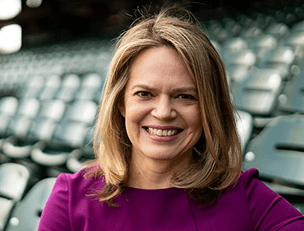
Miriam Kim and Grace Ordóñez recently spoke with MTO alumna Amy Tovar, general counsel at the San Francisco Giants. Amy was an associate in the firm’s San Francisco office from 2004 to 2009.
Amy, thanks so much for joining the alumni newsletter team for this conversation. To start off, tell us how you started at MTO.
I was a summer associate in 2002 in the Los Angeles office. After graduating from law school and clerking in Chicago, I started in the San Francisco office in fall 2004.
How long were you at the firm?
I left in January 2009. My son was born that month, and I was planning to be out on parental leave. However, my husband, Ben Horwich (now a Partner at MTO), got a job at the Department of Justice, so we moved to D.C.
Where did you work while in D.C.?
When I moved to D.C., the baby had just been born so I was home for about a year. MTO didn’t have an office in D.C. at the time. Rather than look for a new firm, I decided to try out government work and joined the Obama administration. I got an appointment as associate general counsel at the Department of Transportation. I worked on a variety of things, including regulatory issues, crisis response and congressional oversight.
After your time in D.C., how did you end up at the Giants?
In 2014, we moved back to the Bay Area, which is home for me. Ben joined MTO, and I was looking for in-house opportunities, but I had an unusual background, having worked in government as opposed to a transactional practice. I saw a job posting for a legal role at the San Francisco Giants and thought that it would be very interesting. Even though I did not have a background in sports, I applied anyway and made it through the application process. I have been with the Giants for nine years now.
What is your current role and your responsibilities? And what was it like to transition to the world of sports?
I’ve really enjoyed working in sports, and I love my client. I work with people who are passionate about what we do. I am constantly working on new issues and wear a lot of different hats. It keeps things fresh and fun. On a single day, I could go from working on a multimillion-dollar deal to reviewing a contract with a hotel that the team is staying at next year. I’ve gotten exposure to real estate, media rights and intellectual property issues. I have also dealt with government relations — whether through pending legislation that might impact our business or interacting with San Francisco, our landlord. I have also worked on updating our ticketing model to ensure its compliance with new California laws.
Were you a fan of the Giants as a Bay Area native?
I grew up in a family of die-hard Giants fans. At the time, I was probably the least passionate, but I am now very passionate. I remember my dad and grandma loving the Giants, and I enjoy thinking about how excited they would be today knowing that I have a role with the team.
What is it like working for an iconic institution in the Bay Area?
It is amazing being associated with such an important part of the Bay Area. As a team, we understand that we are carrying forward something that’s not just a business — it’s a valuable community asset. We take pride in and responsibility for taking proper care of it.
Has your experience at MTO helped you in your practice at the Giants?
Absolutely. I am constantly drawing on past experiences at MTO. I received excellent training in seeing issues from different sides and analyzing risk. That type of training set me up for what I deal with now, even though I’m not typically writing briefs or appearing in court. My MTO background is especially helpful now that I’m looking at our business to make sure we’re compliant with the law.
What do you miss and not miss about MTO?
I miss the people (although, I do still see so many of you!). I also miss the feeling of knowing you have delved deeply into an issue. In my job, there are so many legal issues that there isn’t sufficient time to thoroughly research each one.
I do not miss struggling as an associate to feel excited about a client with whom I might not have an immediate connection (although I did have some great clients like Coca-Cola, for which I got to travel around the world on a case). Now, I’m completely invested in one client, which is something I really appreciate about my role.
In your role as a client, do you have any thoughts or advice for MTO or alumni who are still at firms?
Communication is key. The more that outside counsel can be communicative about where things stand and when the client can expect to receive things, the better.
Interview of
Caroline Cunningham
VP, Associate General Counsel (Product & Commercial) at Lyft

Miriam Kim and Grace Ordóñez recently spoke with MTO alumna Caroline Cunningham, VP, associate general counsel (product and commercial) at Lyft. Caroline was an associate in the firm’s San Francisco office from 2013 to 2016. Prior to joining MTO, she worked at another law firm for two years.
For those who are not familiar with your path, can you share why you decided to go in-house?
I did some work for Lyft while at MTO and was very impressed with the Lyft legal team. Even though they were young, they were very impressive. The Lyft legal team was making significant decisions and high-level strategy choices even though they were less than 10 years out of law school in some cases. That sparked my interest. Ultimately, I decided that I wanted to work closely with one client. I wanted to be very close to the business decisions and deal with the wide array of legal issues that one client faces, particularly those of Lyft.
What roles have you held at Lyft?
I started at Lyft on the litigation team. At that time, the litigation team was five or six attorneys, and we handled diverse legal issues. I handled a wide array of consumer class actions, personal injury cases and contractual disputes. In 2018, the California Supreme Court issued the Dynamex opinion, which set forth the ABC test for worker classification. This led to an influx of litigation at Lyft, so I transitioned to work with the team of lawyers focused on that litigation. And then about two-and-a-half years ago, I transitioned away from litigation. I now run our product and commercial legal team, which focuses on day-to-day product counseling. We also deal with commercial work that is product adjacent, such as a contract that implicates how users experience our app.
Did your experience at MTO impact how you go about your work at Lyft?
In a lot of ways. There is a wonderful culture at MTO of rigorous debate around legal issues, pushing back on each other and pressure-testing ideas. For example, I remember sitting in Miriam Kim’s office for hours at a time preparing for trial or sitting in Rohit Singla’s office being peppered with questions — not in an antagonistic way but in a really healthy way to make sure that we were thinking about all angles of an issue. So much of what you do in-house is issue spotting and pressure testing with your colleagues. MTO’s culture of healthy debate helped me think two steps ahead and anticipate the next question. I really appreciated the collaborative team environment. We created safe spaces to be tough on each other to make sure that our ideas were as strong as they could be. Being at a firm that goes to trial and getting experience preparing for trial really help any in-house attorney have a sense of what matters at the end of the day, such as what facts make a difference and what a judge or jury might think about something. The very hands-on experiences I got as an MTO associate help me make judgment calls every day.
What is it like to be an MTO client?
It is a privilege to be an MTO client. By being on the other side and working with a lot of different firms, you realize the uniqueness of MTO’s advice and responsiveness. It’s really just incredible. In some ways, I’ve been surprised when you don’t get that from every firm, but the reality is that you don’t. I always know that MTO has thought about a legal issue more deeply than I have. MTO is amazing at responding and being on top of it. It’s pretty impressive. We love being a client of MTO. We always feel like we are in really good hands. With outside counsel, you want to feel like counsel knows more than you many times over, and that’s how we feel with MTO.
Lyft has had many women in leadership, including former president Kristin Sverchek and Chief Legal Officer Lindsay Llewellyn. What is it like to be a woman at a company like Lyft?
It’s really important to have women at the top setting the tone. Kristin Sverchek, who was our first general counsel and one of the first employees at Lyft, really set that tone from day one by making sure we had equal representation between men and women in leadership positions. She created the first parental leave policy — because she took the first parental leave — and as a result, we have an amazing parental leave policy for all parents at Lyft.
Lindsay Llewellyn, our CLO, continues that tradition of leadership, and it makes a difference every day to have a leader of the legal team who makes sure everyone feels included. We’ve also had really great champions and allies in male leaders and with the founders as well. One of the first things our new CEO, David Risher, did when he came to Lyft was launch a product called Women+ Connect for rideshare that lets women and nonbinary riders and drivers ride together more often because he feels so strongly about making the Lyft community inclusive and a comfortable place for all users. We have that kind of leadership at the top and all the way down the chain, and it’s a huge reason I’ve stayed at Lyft so long.
Any other thoughts you want to share?
I would like to express a lot of gratitude for my time at MTO. I was extremely well-trained as a lawyer in a short period of time. I think it’s a privilege to keep getting to work with MTO lawyers, and I feel very lucky to still be an MTO client all these years later.
Alumni Lunch Series
This series features alumni who share their inspiring stories, insights and MTO history with our community. Our goal is to provide valuable knowledge to help fulfill your educational needs, with some talks eligible for California MCLE credit. We’re excited to share a recap of our most recent alumni speakers.
Mike O’Sullivan
General Counsel at Snap Inc.

Mike had a long tenure at MTO and worked at the firm from 1996 to 2017 in the Los Angeles office before joining Snap as general counsel. At MTO, he enjoyed practicing in a supportive environment with less pronounced hierarchy, which fostered growth and responsibility. He described a pivotal moment during a bank merger where miscommunication nearly derailed the transaction, teaching him to embrace mistakes — an approach he hopes to cultivate in others.
Mike also shared how he built trust with then-client Snap during their IPO process, which ultimately led to his current role as general counsel. His advice for new lawyers is to be mindful of the “tyranny of expertise,” which creates silos that limit understanding, and he encourages them to explore diverse fields to better navigate complex, cross-functional issues.
Cathleen Hartge
General Counsel at Runway
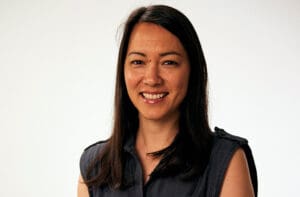
Cathleen joined MTO’s San Francisco office in 2014 and focused on complex litigation matters with international dimensions. In 2018, she joined Branch and now serves as general counsel for Runway. Cathleen shared her experience working in-house and the different dynamics and situations she has had to navigate. She also discussed which attributes are most important to her when seeking outside counsel, including discretion, responsiveness and receiving direct answers.
Cuauhtemoc Ortega
Federal Public Defender for the Central District of California
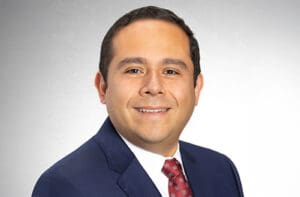
Cuauhtemoc, federal public defender for the Central District of California, leads the nation’s largest federal public defender office, covering seven counties. Reflecting on his time working at MTO’s Los Angeles office from 2008 to 2009, Cuauhtemoc, emphasized how the firm’s training equipped him to navigate the complexities of federal litigation and uphold the highest standards in his practice. He also discussed how his day-to-day work includes overseeing a team managing a broad spectrum of cases, while also tackling the unique challenges that come with serving such a large and diverse district.
Kathryn Eidmann
President and CEO of Public Counsel
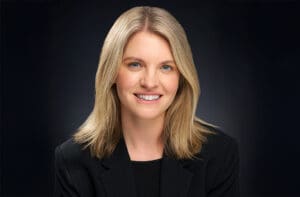
Kathryn worked at MTO from 2011 to 2013 in both the San Francisco and Los Angeles offices before she transitioned to Public Counsel, where she was recently promoted to president and CEO. She highlighted recent collaborations with MTO on various pro bono matters, with projects focused on supporting youth and addressing childhood trauma in education and foster care systems. Kathryn shared insights from notable cases, including a successful effort to secure proper education for a Native American tribe in Stephen C. v. BIE. Reflecting on her time at MTO, she credited the firm’s supportive environment for giving her immediate responsibility and praised its commitment to civic engagement, which remains vital to her work at Public Counsel.
Alan Bersin
Executive Chairman of Altana AI
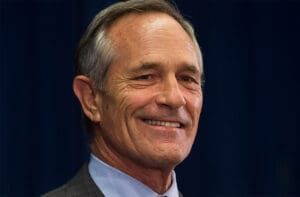
Alan worked in MTO’s Los Angeles office from 1974 to 1992 and shared that the firm played a pivotal role in shaping his career in public service. Recruited from Yale Law School by Ron Olson, Alan was drawn to MTO’s innovative “startup” culture. He described his work on the Bank of America NEMAC case, during which he learned to “think like a lawyer” and developed confidence due to the firm’s trust in its talent. He eventually took on leadership roles at the U.S. Department of Justice and Department of Homeland Security, as well as serving as the secretary of education for California. Reflecting on his journey, Alan emphasized the importance of taking risks while maintaining integrity and building a strong network of supportive friends in order to manage the never-ending challenge of balancing a career and personal life.
Simon (“Sy”) Lorne
Senior Advisor at Millennium Management and Adjunct Professor at Texas Law
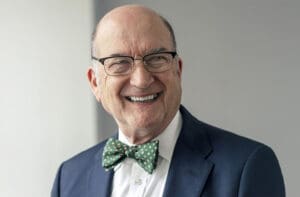
Sy worked at MTO from 1970 to 1993 and again from 1999 to 2004 in the Los Angeles office, following his tenure as general counsel of the Securities and Exchange Commission (SEC). Now a senior advisor at Millennium Management, Sy shared his experience working at the SEC, including his perspective on the recent Fifth Circuit case challenging the SEC’s 2023 Private Fund Rules. He reflected on his early years at MTO, when the firm had only 15 lawyers, and spoke fondly of the collegial atmosphere and warm camaraderie he experienced at the firm. When asked his key to happiness, Sy responded simply: “Freedom.”
Bob Adler
Former Executive Vice President and General Counsel of Edison International

Bob had a 33-year career at Munger, Tolles & Olson, working from the Los Angeles office from 1975 to 2008, before joining Edison International as general counsel. Now retired, Bob spoke about the difference between being a general counsel and an outside lawyer and shared examples of navigating high-stakes regulatory challenges in a corporate setting. His insights highlighted the strategic approach required to tackle these issues and underscored the importance of building strong professional relationships.
Newly Retired Partners
We are proud to celebrate our recently retired partners. Their dedication to MTO and the legal community will continue to influence and inspire us for years to come.
Robert K. Johnson
Retired June 2024
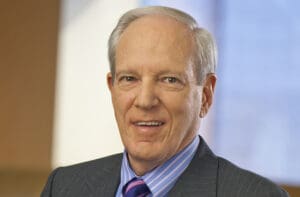
Bob retired from MTO after 56 years of working in the Los Angeles office. He was the first full-time tax lawyer at the firm and served as co-managing partner from 1999 to 2005. Bob worked on a broad range of corporate, partnership, employee benefits, executive compensation and tax matters.
Bob was inducted as a Fellow of both the American College of Tax Counsel and the American College of Employee Benefits Counsel. He was a frequent author and lecturer on tax, executive compensation and employee benefits subjects. He also served as the chair of the Taxation Sections of both the Los Angeles County Bar Association and the State Bar of California.
Martin D. Bern
Retired November 2024

Martin had an impressive 31-year tenure at MTO’s San Francisco and Los Angeles offices. His practice focused on complex commercial and class action litigation, including employment, construction defect, contracts and unfair competition.
Martin also provided pro bono representation and advice to national and local environmental organizations on natural resources, legislative and environmental issues.
News & Insights
Firm News & Achievements
We are delighted to share some of MTO’s recent client successes and accolades for the important work that we do in the courtroom and community.



Overview
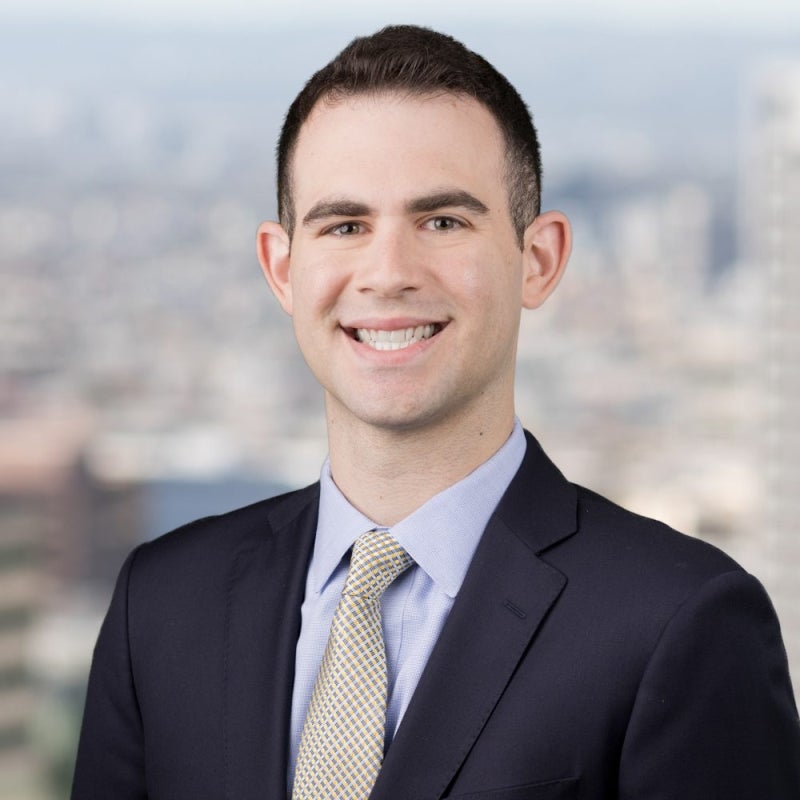
Steven Levick is a corporate attorney in the Los Angeles office of Munger, Tolles & Olson whose practice touches on a wide array of corporate transactions and securities matters.
Steven’s practice focuses on solving his client’s most challenging problems, including structuring strategic investments across a variety of industries, negotiating complex settlement agreements to resolve contentious litigation and managing novel regulatory matters. His clients range from large, publicly traded businesses to private investment firms to some of the most notable ultra-high net-worth individuals and family offices in the country.
When representing ultra-high net-worth individuals and family offices, Steven emphasizes discretion and responsiveness to help clients address their most sensitive legal challenges and achieve their goals. Recent institutional representations include Berkshire Hathaway, Blue Owl Capital, Hawaiian Electric, Oaktree Capital Management and the University of California.
At the firm, Steven has maintained a focus on community service. Notably, he helped establish MTO’s partnership with Legal Education Access Pipeline, Inc. (LEAP), where he now serves as a board member. He also serves on the Paul Davis MTO Associate Fund Committee, which is an associate-sponsored fund that makes donations to charitable organizations in the Los Angeles, San Francisco and Washington, D.C. communities.
While attending the University of California, Los Angeles School of Law, he worked as a law clerk on the Senate Judiciary Committee for Sen. Dianne Feinstein and as a judicial extern to the Honorable Sandra S. Ikuta on the U.S. Court of Appeals for the Ninth Circuit. He also co-led UCLA Law’s Education Rights Clinic, advising students and families under the supervision of Public Counsel.
Before law school, Steven worked on the corporate strategy and planning team in the CEO’s office of one of the nation’s largest health insurers.

Capabilities
Practices

Experience
Corporate and Private Wealth
Steven’s key representations include:
Notable Founders and Family Offices in advice pertaining to investments, corporate governance, compliance, grantmaking and other strategic transactions.
Berkshire Hathaway in its $11.6 billion acquisition of insurer Alleghany Corporation.
The Founder and Executive Team of Silvus Technologies in its $5 Billion Sale to Motorola Solutions.
Oaktree Capital Management in its $88 million divestiture of the South Terminal of the Austin-Bergstrom International Airport following litigation with the City of Austin.
Sotera Health in its $408 million settlement to resolve more than 870 ethylene oxide cases in northern Illinois.
iHeartMedia companies in a debt-exchange restructuring transaction to reduce iHeartCommunications, Inc.’s $5.2 billion of debt by approximately $500 million.
A subsidiary of Fomento Economico Mexicano, S.A. de CV (FEMSA) in a number of strategic acquisitions.
Nexus Capital Management in its acquisition of Lamps Plus, a retailer of lighting, ceiling fans and other home furnishing products with 35 stores throughout the Western U.S. along with a huge online business.
KB Home in managing and negotiating various credit facilities.
More
- Legal Education Access Pipeline, Inc. (LEAP), Board Member, 2023-present
News & Insights
News & Achievements
Overview
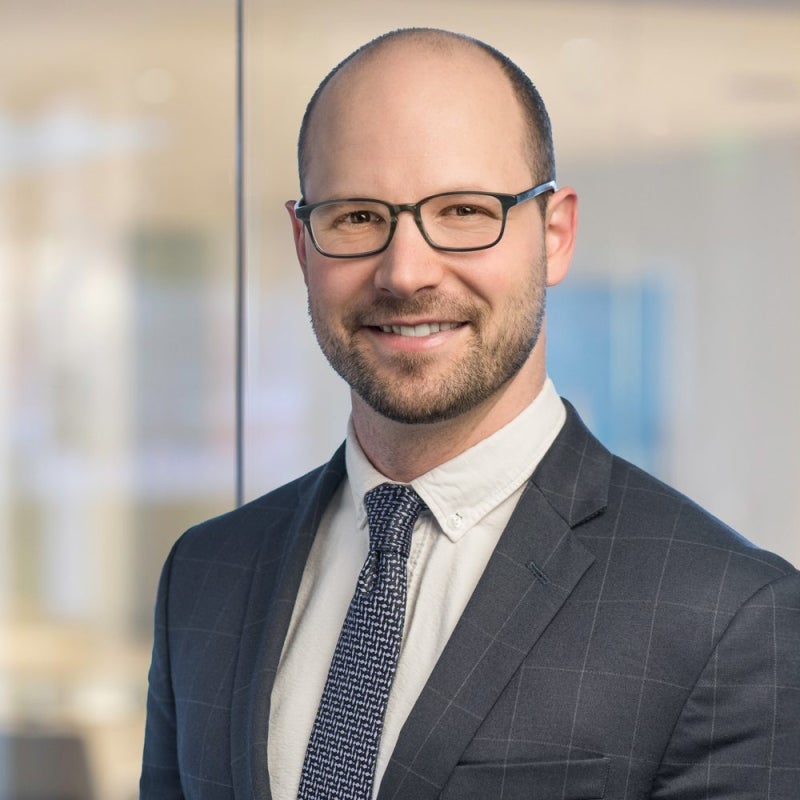
J. Max Rosen is a partner in the San Francisco office of Munger, Tolles & Olson whose practice focuses on complex commercial litigation, including mass tort litigation, strategic advising, insurance and appeals.
Max has extensive experience in resolving complex high-stakes commercial litigation, including representing multiple utilities in cases arising out of wildfires. He was one of the lead members of the team that represented Hawaiian Electric in securing a historic global settlement resolving litigation related to the devastating 2023 Maui wildfires. Max has also become a go-to policy advisor to utility companies on wildfire legislation. He has represented numerous utilities in drafting and conceptualizing legislative solutions to the challenge of wildfire liability and spoken on the topic at a leading utility conference.
Max also has broad and diverse appellate experience. He has drafted merits briefs in high-stakes appeals in the U.S. Supreme Court; the U.S. Court of Appeals for the First, Fourth, Fifth, Sixth and Ninth circuits; the California Supreme Court; the California Courts of Appeal and the Missouri Supreme Court. He has argued appeals in both state and federal appellate courts, including two appeals in the California Courts of Appeal that led to published, watershed decisions in favor of his clients.
Max also has a growing insurance practice focused on representing insurers in high-stakes bad faith litigation across the United States in state and federal court, as well as representing policyholders in significant insurance disputes.
In 2024, Max was named one of the 40 Best LGBTQ+ Lawyers Under 40 by the National LGBTQ+ Bar Association. In that same year, he received the Keta Taylor Colby Award from the Lawyers’ Committee for Civil Rights of the San Francisco Bay Area for his work representing the Coalition on Homelessness in a high-stakes California appeal.
Max sings as a baritone in the San Francisco Gay Men’s Chorus.
Capabilities
Practices
Experience
Appellate
Notable appellate representations:
A landlord in Napa in successfully winning its unlawful detainer eviction action against a corporate tenant on summary judgment and thereafter receiving an award of over $2 million in attorneys’ fees. Max briefed and argued the appeal in the California Court of Appeal, resulting in an affirmance by published opinion.
The Coalition on Homelessness in the California Court of Appeal challenging the common municipal practice of towing vehicles without a warrant on the basis of unpaid tickets. Max briefed and argued the appeal. The Court of Appeal reversed the trial court and held, in a published opinion, that such tows violate the federal and California constitutions. Max received an award from the Lawyers’ Committee for Civil Rights for his work.
Snap before the California Supreme Court in a case addressing the scope of the Stored Communications Act.
Block, Inc. (formerly Square, Inc.), before the California Supreme Court, the California Court of Appeal and California state court — ultimately resulting in the dismissal of White v. Block, an important lawsuit for numerous internet services companies facing claims of discrimination regarding their terms of service.
The petitioner in In re Grand Jury, a case in the U.S. Supreme Court addressing the standard for applying the attorney-client privilege to dual-purpose communications.
Mass Tort and Commercial Litigation
Notable trial representations:
Hawaiian Electric Industries and Hawaiian Electric Company in securing a historic settlement resolving litigation related to the devastating 2023 Maui wildfires.
Pacific Gas & Electric Company in litigation arising out of the 2021 Dixie Fire.
The Walt Disney Company in a copyright infringement suit relating to the song “Let It Go” from Disney’s “Frozen” and the “Pirates of the Caribbean” franchise.
Quotient, Inc. in successfully opposing a TRO filed in Santa Clara County Superior Court.
Checkr, Inc. in successfully settling allegations of trade secrets theft, unfair competition and breach of contract brought by Safety Holdings, Inc. over Checkr’s alleged development of a competing platform for pulling motor vehicle records. After discovering that the only trade secret identified in the complaint was publicly available online, we brought the case to a confidential settlement.
GEICO in numerous cases across the country as national coordinating counsel, including:
- Resolving a lawsuit in Nevada federal court stemming from a $65 million arbitration award issued against GEICO’s insured.
- Securing summary judgment, affirmed on appeal, in a case where a woman claimed a GEICO auto policy covered $5.2 million in damages awarded to her for contracting a sexually transmitted disease in an insured man’s car.
Strategic Advising
Hawaiian Electric Industries and Hawaiian Electric Company in drafting and advising on wildfire-related legislation.
NV Energy in an application for wildfire self-insurance from the Nevada Public Utilities Commission.
More
- The Best Lawyers in America, “Ones to Watch” List, 2026
- 40 Best LGBTQ+ Lawyers Under 40, the National LGBTQ+ Bar Association, 2024
- Pro Bono Award: Keta Taylor Colby Award, Lawyers’ Committee for Civil Rights of the San Francisco Bay Area, 2024
- Co-founder of the Yleana Leadership Academy
- Member, San Francisco Gay Men’s Chorus
Publications
- Co-author, “Attorney-Client Privilege Lessons from In re Grand Jury,” ACC Docket, December 7, 2023
Speaking Engagements
- Speaker, Western LAMPAC (Labor & Management Public Affairs Committee) Conference, April 2025 (addressing wildfire legislation)
- Speaker, 16th Annual Entertainment & Media Law Conference, National Center for the Preservation of Democracy, Jan. 17, 2020 (addressing the Supreme Court’s decision in Allen v. Cooperand sovereign immunity for states defending against copyright infringement claims)
Regulatory and legal scrutiny is growing in the financial sector. MTO helps financial institutions navigate litigation, investigations and strategic risk with practical, business-minded advice. We combine industry knowledge with litigation and appellate strength, resolving high-stakes matters with precision and perspective.
Financial Services
Clear legal solutions to minimize litigation and regulatory risk.
Overview

Clients
We represent a select group of financial clients, including:
- Bank of America
- Merrill Lynch
- Wells Fargo
- Western Alliance Bancorp.
- BMO Harris
- UBS
- Warburg Pincus LLC
- DoubleLine Capital
- Fortress Investment Group, LLC
- Berkshire Hathaway
- Oaktree Capital Management LP
- American Express
Experience
Civil Litigation
We represent some of the nation’s most prominent companies in cutting-edge areas of commercial, business and consumer law. We also have extensive experience defending clients in high-stakes class action lawsuits and routinely obtain dismissals at the pleading stage or denials of class certification.
An example of the out-of-the-box approach by MTO can be seen in a case where Charles Schwab had brought suit against Wells Fargo seeking tens of millions of dollars in rescissory damages on investments, damages measured by the fair value of a security. Munger, Tolles & Olson developed a novel and unprecedented argument concerning the proper calculation of prejudgment interest in the rescission context. We filed a motion for summary judgment, arguing that when interest was properly calculated, Schwab had no rescissory damages. The court agreed and dismissed the case and Schwab was ordered to pay Wells Fargo’s costs for defending the suit.
A great deal of the work we perform in this space is resolved through alternative dispute resolution methods, including arbitration, mediation and direct settlement negotiations. By their nature, most of these engagements are confidential, but public examples of our representations include:
- Bank of America in:
- Litigating and resolving a range of disputes arising from the global financial crisis. By way of example, our team helped to settle Bank of America’s long-running, multibillion-dollar web of litigation with monoline mortgage insurer Ambac Assurance Corp./Ambac Financial Group — litigation that had been pending for many years in courts across the country. We obtained dismissal or favorable resolution of numerous state and federal securities actions filed by U.S. and foreign institutional investors in connection with residential mortgage-backed securities (RMBS) purchased prior to the financial crisis. We also defended the Bank against litigation filed in numerous states by the FDIC relating to losses allegedly suffered on RMBS investments.
- Bank of America subsidiary against indemnification litigation brought by UBS for its RMBS securities settlements, including its $885 million settlement with the Federal Housing Finance Agency.
- Litigation brought by the State of New Mexico on behalf of state pension funds alleging approximately $120 million in alleged losses, for which it claimed a right to collect treble damages (i.e., $360 million) plus statutory penalties from Bank of America and several other banks. With a motion to dismiss pending, Bank of America and the other defendants were able to settle on favorable terms.
- Interpleader litigation in New York federal court involving a dispute over sales of securities backing a collateralized debt obligation (CDO).
- An investigation by a consortium of district attorneys relating to the Bank’s call recording disclosure requirements.
- Defending Bank of America’s subsidiary Countrywide Home Loans in a case brought by Swiss bank UBS seeking recovery of $200 million in connection with its settlements of mortgage-crisis-era securities litigation.
- Merrill Lynch entities in:
- Securities class actions brought against Merrill Lynch as underwriter of public securities offerings.
- A putative class action alleging the wrongful escheatment of customer stock interests in third-party corporations.
- A putative securities class action filed by Plymouth County Contributory Retirement System.
- Breach of contract actions brought by U.S. Bank National Association in its capacity as trustee for RMBS trusts.
- Wells Fargo in:
- A lawsuit brought by Ronald Hilton (of the Hilton hotelier family) over inheritance of millions of shares of Hilton Hotels Corporation stock from deceased hotel magnate Conrad Hilton.
- Obtaining a settlement in a class action for opening unauthorized accounts on behalf of retail banking customers. More than a dozen other class action suits were also filed; most were dismissed in favor of arbitration or due to individual settlements.
- Obtaining affirmance of summary judgment in a lawsuit, brought by the City Attorney of Los Angeles, alleging that Wells Fargo engaged in discriminatory and predatory mortgage-lending practices targeting minority borrowers in violation of the Fair Housing Act.
- Obtaining summary judgment in a lawsuit brought by Charles Schwab & Company alleging losses on RMBS issued by a Wells Fargo subsidiary.
- Obtaining summary judgment and numerous dismissals at the pleading stage in cases alleging that Wells Fargo breached duties as trustee of numerous trusts.
- Obtaining a settlement in a class action lawsuit alleging $575 million in damages brought by a class of institutional investors who alleged that the bank breached the terms of its securities lending program contracts and its fiduciary duties to its customers by placing them in inappropriately risky investments. This favorable class action settlement was made possible by Munger, Tolles & Olson securing a unanimous jury verdict win on an individual action alleging the same claims following a seven-week trial.
- Obtaining denial of class certification in a lawsuit brought by home mortgage consultants alleging underpayment of wages.
- DoubleLine Capital, an investment management firm and its, CEO, Jeffrey Gundlach, against an action brought by former partners in a JAMS arbitration, achieving a complete defense award as well as victory on counter claims that significantly reduced the value of the partners’ outstanding equity after a two-phase, multi-week hearing. In January 2024, MTO successfully secured confirmation of the arbitration award denying all claims facing DoubleLine Capital and its founder.
- Fortress Investment Group in successfully resolving a lawsuit filed by HM Ruby, a life settlement investment fund, that claimed $400 million in damages for Fortress’ alleged violations of a credit agreement. After MTO won a bench trial for Fortress in 2016, an appeals court reversed on the ground that HM Ruby was entitled to a jury trial. The matter was resolved for Fortress on favorable terms in January 2022, shortly before a second trial.
Appellate
Munger, Tolles & Olson litigators are known as much for providing long-term strategic leadership on cases as for their ability to join defense teams on the eve of trial. Examples of our work follow:
- Grayscale Investments LLC, the largest publicly traded bitcoin investment fund in the world, in challenging the SEC’s decision to block a national exchange’s request to convert Grayscale’s flagship product to a spot ETP that would hold and closely track the value of bitcoin. The U.S. District Court for the District of Columbia vacated the SEC’s decision, leading to the SEC approving the first listing and trading of spot bitcoin ETPs (including Grayscale’s) in January 2024.
- BMO Harris in overturning a $560 million jury award (more than $1 billion with prejudgment interest) arising out of the multi-billion-dollar Petters Ponzi scheme. BMO Harris was found liable for aiding and abetting a breach of fiduciary duty that was perpetrated by high-level Petters company executives who held a company account at a predecessor to BMO Harris. The U.S. District Court for the Eighth Circuit reversed the jury verdict and instructed the district court to enter judgment for BMO.
- American Express in a U.S. Supreme Court victory in a lawsuit brought by 17 states and the U.S. Department of Justice alleging that the credit card company’s merchant contracts were anti-competitive and violated federal antitrust laws.
- Bank of America and its senior executives in a U.S. District Court for the Second Circuit appeal resulting in affirmance of a district court’s dismissal of a shareholder class action.
- Defendants Fifth Third Bank and Associated Commercial Finance, Inc., in affirming the dismissal of the bulk of the plaintiffs’ claims for fraudulent transfer and unjust enrichment relating to a syndicated loan as part of an alleged $3.7 billion Ponzi scheme. On remand, MTO convinced the plaintiffs to dismiss their remaining claims.
- Wells Fargo in winning a landmark decision for itself and also for the mortgage lending and servicing industry, in Kwang Sheen v. Wells Fargo Bank, N.A., in which the California Supreme Court ruled that lenders and loan servicers do not owe borrowers a general duty of care to protect a borrower’s economic interests, including when processing, reviewing or responding to a mortgage modification application.
Key Contacts
See Full Team
Partner
Partner
Partner
Partner
Partner
Partner
News & Insights
More Capabilities
Restructuring challenges create uncertainty and distress. We use our experience and understanding to work closely with our clients to formulate strategies to address uncertain situations with confidence and resolve the distress with practical solutions.
Financial Restructuring
Practical counsel for complex financial distress.
Overview
Clients
Utility and Energy
- Berry Petroleum
- Edison International
- Energy Future Holdings
- GenOn Mid-Atlantic
- Hawaiian Electric
- Oaktree Capital in Salem Harbor reorganization
- Pacific Gas & Electric
- Southern California Edison
Technology, Entertainment, Media and Culture
- Caruso
- Hollywood Studios
- iHeartMedia
- Intel
- Netflix
- Owners of Station Casinos
Retailers
- ABL Agent in Revlon
- Costco
- Founders of Forever 21
- Gymboree
- NineWest
- Payless Shoes
- Toys “R” Us
Other Industries
- Bolivarian Republic of Venezuela
- Caruso Affiliated Holdings
- Envoy Solutions LLC and FEMSA
- Paul Getty Trust
- WeWork
- Whirlpool
Financial Services / Funds
- Alter Domus
- Bank of America
- Berkshire Hathaway
- BMO Harris Bank
- EagleTree Capital, LP (formerly Wasserstein Partners, LP)
- Fortress Investment Group
- Merrill Lynch
- Monarch Capital
- Nexus Capital Management
- Oaktree Capital
- Panning Capital
- Silver Point Capital
- Term Lenders to General Motors
- The Yucaipa Companies
Experience
Recent public engagements include the following representations:
- Alter Domus, the agent for certain lenders under an asset-backed credit agreement with Revlon Inc. in connection with Revlon’s bankruptcy cases and use of cash collateral.
- Bank of America in the Ditech Financial bankruptcy and asset sale and settlement of claims between the companies.
- Berkshire Hathaway in various restructuring matters including the Whittaker Clark & Daniels bankruptcy case, as a bondholder and asset buyer in the Residential Capital bankruptcy, the plan sponsorship investment in USG and the acquisition of Fruit of the Loom, FINOVA and Oakwood Homes.
- Berry Petroleum, in its bankruptcy reorganization and separation from Linn Energy.
- Bolivarian Republic of Venezuela in an ongoing case with respect to the enforcement of a $1.4 billion judgment obtained by Crystallex related to the Maduro government’s nationalization of assets in Venezuela.
- Caruso Affiliated Holdings in connection with various theatre chains.
- DIP, as agent, and secured lenders to Freedom Communications in its restructuring.
- Disney, Lucasfilm, Fox, Marvel, New Line, Turner Entertainment and another studio in successful resolution of claims in VidAngel’s bankruptcy.
- Envoy Solutions, LLC, in its sponsorship of a plan of reorganization for manufacturing company GPMI, Co.
- GenOn Mid-Atlantic, an electric power generation and distribution company, in its out-of-court restructuring of leveraged lease coal plants.
- Google, in pursuing judgment and indemnity against Anthony Levandowski and Uber related to trade secret claims regarding auto driving technology.
- Hawaiian Electric Industries, Inc. regarding the August 2023 devastating Maui wildfires, including the Lahaina Fire, which was the deadliest U.S. wildfire in over a century.
- iHeartMedia’s independent directors in the largest U.S. bankruptcy filing in 2018.
- Invictus Global Management on various restructuring and distressed investment opportunities.
- J. Paul Getty Trust, in the acquisition of archives from Ebony magazine through a section 363 sale in bankruptcy court.
- LATAM Unsecured Creditor Ad Hoc Group, in their appeal of orders confirming the plan of reorganization and backstop agreements in the reorganization of LATAM Airlines Group, S.A.
- Netflix in connection with Chilean media company WOM SA’s bankruptcy restructuring.
- Nexus Capital Management, a California-based private equity firm, in its acquisition out of bankruptcy of FTD Companies’ florist network in North America and Latin America.
- Oaktree Capital Management LP in connection with the out-of-court and subsequent in-court reorganization of its portfolio company-owned power plant in Salem Harbor, Massachusetts.
- Lenders in the Petters Bankruptcy Cases, a group of syndicated lenders to Polaroid Corp. in fraudulent transfer actions brought by Ritchie Capital related to the Thomas Petters Ponzi scheme.
- PG&E Corporation in their bankruptcy reorganization cases with respect to certain matters including regulatory matters, power purchase agreements and wildfire claims.
- Seadrill Limited senior management in connection with their exit employment agreements.
- Significant roles in the Gymboree, Payless Shoes, Toys“R”Us, and Nine West bankruptcy cases.
- Southern California Edison in various matters, including the first municipal bankruptcy of community choice aggregator Western Community Energy and advice in connection with a Canadian Receivership of Rokstad entities.
- TCEH, an energy company focused on the competitive energy and power generation markets, in the restructuring of Energy Future Holdings Corp., a privately held company with a portfolio of competitive and regulated energy companies.
- WeWork, Inc. at the direction of a Special Committee of independent directors of the board with regard to conflicts matters with related parties, including SoftBank Group and affiliates, and Adam Neumann.
- Whirlpool, the world’s largest home appliance manufacturer, as a creditor to Sears, Roebuck and Company in its Chapter 11 bankruptcy case.
Key Contacts
See Full Team
Partner
News & Insights
Awards & Recognitions
61 Rankings in 2026 Chambers Guides
News & Insights
More Capabilities
Practices
Industries
Overview
John Major is a litigator whose practice focuses on complex civil litigation, with an emphasis on representing internet and technology companies. His recent representations include matters for Airbnb, Block and Snap.
John has significant experience in representing technology companies in a wide range of disputes, including experience in litigation involving the Communications Decency Act and in representing technology companies in disputes involving platform liability, trade-secret issues and compliance with novel regulatory requirements.
John has also published multiple articles regarding platform liability and Section 230 of the Communications Decency Act, including an overview of efforts to amend Section 230 and an article discussing non-Section 230 defenses to claims against platforms.
Capabilities
Practices
Industries
Experience
Technology Litigation
Snap in MDL and JCCP proceedings alleging that prominent social media platforms cause addiction and other harms.
A social media platform in obtaining dismissal of First Amendment and state law claims in an action brought by a Russian news agency concerning the platform’s removal of its content following the Special Counsel’s investigation of foreign interference in the 2016 presidential election.
Snap in obtaining dismissal of multiple lawsuits alleging that Snapchat app encouraged harmful conduct by users.
Snap in litigation alleging trade secret and patent claims relating to its “Snap Map” feature.
Airbnb in obtaining dismissal of a putative class action claiming that Airbnb facilitated violations of San Francisco’s short-term rental laws. The dismissal was affirmed on appeal.
Airbnb in litigation challenging municipal regulations of its operations and platform under the Communications Decency Act, Stored Communications Act, First and Fourth Amendments and related state-law causes of action.
Airbnb in litigation brought by a real estate investment trust company alleging that Airbnb interfered with its lease agreements and aided and abetted trespass.
Lyft in compelling arbitration of claims relating to use of the Lyft app.
A technology start-up in litigation regarding alleged breaches of contract and a former employee’s claimed entitlement to additional equity.
A start-up gaming company regarding pre-litigation claims of copyright infringement.
Complex Civil Litigation
John also litigates high-stakes disputes in a variety of other contexts, representing individuals, law firms, utility companies, home builders and other major corporations in their most important and challenging cases.
More
- Board member, Kidspace Children’s Museum, Pasadena, California
- Vice Chair of the board of Neighborhood Legal Services of Los Angeles County
- Board of Councilors Clerkship Committee, University of Southern California Law School, which encourages USC Law students to seek judicial clerkships
- Homeowners Committee, Frank Lloyd Wright Building Conservancy
Publications
- “Platform Immunity Without the Communications Decency Act,” Daily Journal, June 4, 2020.
- “What’s Next for Section 230? A Roundup of Proposals,” Lawfare, July 29, 2020.