

Spring 2026
Alumni Network Newsletter
Stay ConnectedA Welcome Message From Firm Chair, Brad Brian
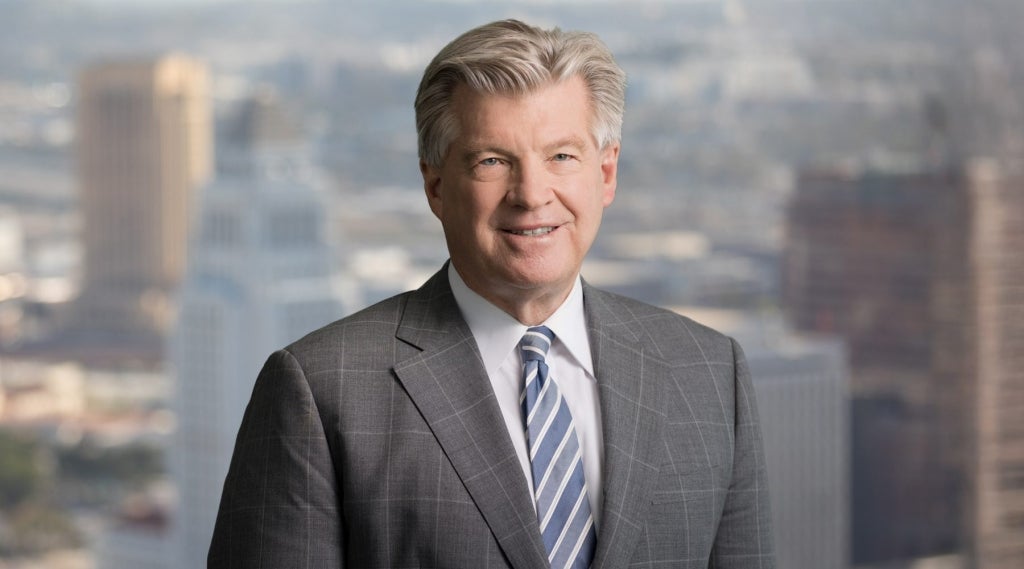 Welcome to the latest edition of our alumni network newsletter. These are great times for Munger, Tolles & Olson. We are privileged to serve some of the best clients in the world, and we continue to recruit and promote the best lawyers and professionals to make that possible. The firm has been recognized both locally and nationally for the quality of our lawyers and for the work we have been doing to protect the rule of law in our country. I am proud to serve as the firm’s chair.
Since our previous newsletter, we were fortunate to welcome Andrew Radsch to the firm as a partner in our San Francisco office. Andrew was previously a partner in the intellectual property litigation group at Ropes & Gray. We also elevated five MTO attorneys to partner, effective Jan. 1: Nicole Howell, April Hu, Jeremy Kreisberg, Max Rosen and Dane Shikman. Our new partners are very intelligent, committed to doing the best possible work for our clients and dedicated to giving back to the communities in which we live and practice.
This edition of the newsletter features interviews with two exceptional alumni. Judge Michelle Friedland shares her path from academia and private practice to the U.S. Court of Appeals for the Ninth Circuit, along with reflections on her confirmation and service on the bench. Zac Katz, chief legal officer and head of global affairs at Grindr, discusses his career, including his time at MTO, in the Obama administration and at the Federal Communications Commission, as well as his current work at the intersection of technology, privacy and public policy. We end this edition by sharing news about our recent alumni lunch speakers, recent alumni in government and in-house, client successes and firm wins.
Thank you for continuing to stay engaged and connected.
All the best,
Brad Brian
Firm Chair

Alumni Spotlight
Over the course of their careers, our MTO alumni have collected incredible insights and stories to share. In this series, read interviews from those who have called MTO home throughout the years and contributed to the firm’s rich history.
Interview of
Judge Michelle Friedland
U.S. Court of Appeals for the Ninth Circuit

Ninth Circuit Judge Michelle Friedland practiced at MTO from 2004 until she was confirmed to the bench in 2014. The Stanford Law School graduate previously clerked for Judge David Tatel of the U.S. Court of Appeals for the District of Columbia Circuit and for Justice Sandra Day O’Connor on the U.S. Supreme Court. She was a lecturer at Stanford Law for two years before joining MTO.
Retired Partner Jeffrey Weinberger interviewed Judge Friedland about her career, her confirmation process and her high-profile work as a judge.
What subjects did you teach at Stanford?
I taught federal jurisdiction and environmental law. Federal jurisdiction is usually a capstone 3L class and was a big lecture course. Environmental law focused on pollution and was a smaller class of about 20 students.
Were you thinking of a career in academia at that point?
I was. I went all the way through law school thinking I would be a law professor, not a lawyer — and certainly not a judge.
How did you wind up at MTO?
Once I decided to become a practicing lawyer, I initially only interviewed with firms that had offices in Palo Alto because we were living in Mountain View and my husband worked in Silicon Valley. But friends from Stanford — Shont Miller and Aaron May — encouraged me to interview with MTO’s San Francisco office. I was so impressed with the people, the practice, and the potential opportunities that I concluded that the commute would be worth it.
What was the nature of your practice at the firm?
I spent most of my time working on constitutional issues in higher education and, as you know, on antitrust work for our pharmaceutical clients. I loved my practice and the people at MTO very much.
I also did a lot of pro bono work, generally alongside the National Center for Lesbian Rights, now known as the National Center for LGBTQ Rights.
Were you looking to become a judge at some point?
Not at all; I didn’t even apply. One Friday there was an email in my inbox with the subject line “Ninth Circuit” from a name I didn’t recognize. I was working on a brief and assumed the email was from an associate asking a question about the Ninth Circuit, so I didn’t open it until hours later. The email asked whether I would like to be considered for an opening on the Ninth Circuit. I honestly didn’t know if it was real.
Mike Mongan, who until recently was the California solicitor general, was at the firm and had worked for Vice President Joe Biden, so I asked him confidentially, “Do you know this person? Is this real?” He said it was. I still thought it seemed unlikely that I was being looked at seriously, but I wrote back saying I’d be honored to be considered. Ten minutes later, the phone rang and they asked if I could interview Monday morning.
Were you surprised when you learned that you were being considered?
It was very surprising because earlier in my career I took on pro bono work that was considered controversial at the time and that I truly thought would prevent anyone from considering me for a nomination. It began when I volunteered to work with Jerry Roth on representing Equality California alongside the National Center for Lesbian Rights in defending a state tax regulation that treated domestic partners the same as spouses. We ended up winning that case.
In 2008, when Barack Obama and Proposition 8 to eliminate same-sex marriage were both on the ballot, Heller Ehrman had been leading the marriage litigation in California with the National Center for Lesbian Rights and other LGBTQ rights organizations. About six weeks before the election, Heller Ehrman shut down. That same day, the National Center for Lesbian Rights called and asked if I would take over the case and represent them in the challenge to Prop. 8 if it passed. MTO was very supportive and we built a team for the case. But again, this was potentially controversial work.
At the confirmation hearings, was that work an issue? And how did you prepare for that?
I expected a lot of questions about that work and was prepared for it.
I had clerked for Justice Sandra Day O’Connor, so while I was in Washington, D.C. for the confirmation hearings, I reached out to see if she was available for a visit. Her office initially said she wouldn’t be in town, but the night before the hearing, I was notified that she would attend the hearing in person.
There was no precedent for a Supreme Court justice attending a nominee’s hearing, so I called the Judiciary Committee staff to ask how to arrange it. The aide I spoke to said, “That’s really good news for you.”
Justice O’Connor sat directly behind me during the hearing. Senators from both parties came to greet her because it was a big deal to have a Supreme Court justice there. Every time one approached, she would wag her finger and say, “I’m here because Michelle would be a great judge.”
I spent weeks preparing for tough questions, but most of those questions never came. I think the optics of having Justice O’Connor literally at my back caused senators to decide not to ask them at all.
In the end, Sen. Chuck Grassley, R-Iowa, was the only Republican who came to the hearing. He asked some difficult questions, but they were generally questions I had anticipated and was ready for. One question he asked was whether diversity on the bench matters.
I answered that I was in fourth grade when Justice O’Connor became the first woman on the Supreme Court, and it made me feel like I could aspire to anything. Years later I had the chance to clerk for her, and now I was sitting there being considered for a judgeship myself. I said that role models matter and that’s why diversity on the bench matters. As I spoke, Senate staffers cried — and even Sen. Grassley seemed moved. It was the first moment I thought maybe I really will be a judge!
What do you think is the most significant matter you have been involved in since taking the bench?
I was involved in the first litigation over the 2017 travel ban. I happened to be on the Ninth Circuit’s emergency motions panel that month when the ban went into effect and people were being detained in airports across the country.
Motions duty had previously not been very demanding, but this quickly became an emergency appeal from a preliminary injunction issued by the U.S. District Court for the Western District of Washington. I spent that entire weekend reading briefs.
We held oral argument that Tuesday by telephone because the panel included judges in Arizona and Hawaii and we didn’t have time to fly to gather in the same city. The argument was livestreamed on cable television and ended up being watched by tens of millions of people, which was extraordinary for a court proceeding.
Two days later, we issued an opinion upholding the district court’s injunction. The whole process — from the emergency filings to the decision — happened in less than a week.
It was an intense and surreal experience. The weekend after the decision, my phone started buzzing with messages saying I was on “Saturday Night Live.” It turned out there was a skit with Vanessa Bayer playing me!
Now that you’ve been a judge for 12 years, is your experience different from your expectations going in?
I expected it to be an interesting job, and it certainly is. It’s intellectually challenging and very rewarding to decide cases across such a wide range of issues.
There were a few things I didn’t anticipate. One is how much travel the job involves. I’m typically on the road for oral arguments about one week out of every six. When my children were younger, that was a lot of time to be away.
I also didn’t fully appreciate how much running chambers is like running a small law firm. You hire and supervise law clerks and manage the work of the office. At MTO, those responsibilities were shared across committees, but as a judge, you handle them yourself.
Interview of
Zac Katz
Chief Legal Officer and Head of Global Affairs, Grindr

Grindr Chief Legal Officer and Head of Global Affairs Zachary Katz was an associate at MTO from 2006 to 2009. Partner Bethany Kristovich talked with him about his work at the leading gay social platform, now a public company, and how his time at MTO impacted his career path, which included working in the Obama White House and at the Federal Communications Commission (FCC).
Why did you decide to go in-house?
Coming out of college in 1999 as a history of science major, I was interested in technology and the ways it was shaping the world. I started working in Silicon Valley at a strategy consulting and venture capital firm, serving early-stage tech companies as they grew and scaled.
There were a lot of things I liked about Silicon Valley at that time, but I went to law school looking for something more, in part for the opportunity to have a career including public service. I had a sense early on that a traditional law firm path might not ultimately be the best long-term fit. Over time, I realized that I was most energized by being part of an operating team — closer to an organization’s day-to-day decision-making and execution.
So after MTO and four years of public service, moving back into a business environment felt like a natural next step.
Tell us about your government service.
I got lucky. At MTO in the mid-2000s, I was based in Los Angeles doing mostly corporate work while [current Anthropic general counsel and former MTO partner] Jeff Bleich was in the Bay Area focused on litigation. We’d never met, but I heard he had Willie Mays as a client. My dad grew up as a New York Giants fan and would talk about seeing Mays play, so I wanted the chance to work for Jeff. I reached out to him, and he was gracious in bringing me on to the matter, which gave me the chance to meet Willie a few times — and to get to know and learn from Jeff.
In 2008, Jeff was doing a number of things for the Obama campaign. That summer the campaign asked Jeff to assemble a team of attorneys to vet potential nominees so if Obama won he could announce his senior team quickly. I liked Obama — I had a campaign poster up in my office at MTO — and when Jeff asked if I wanted to support a team of MTO volunteers to do that work, I told him I’d love to. In November, Obama won and Jeff and I continued to do vetting during the transition. What I didn’t know then was that Jeff was going to become the U.S. ambassador to Australia and before that would be asked to lead the vetting operation in the White House. In early 2009, he gave me the opportunity to join him in the White House. The position was temporary and was likely to end in a few months, but it was the most excited I’d ever been about a job. So I left MTO and L.A. and came to Washington, D.C., in March 2009.
I initially worked for Jeff in the White House Counsel’s Office, where I helped manage the vetting operation and separately worked on tech and telecom policy issues. Jeff was a great boss and mentor, but he was going to be leaving for Canberra at some point. While I was in the White House, I met Julius Genachowski, who had been nominated to serve as chair of the FCC, and he hired me at the agency in a mid-level role.
Over the next four years I held a series of positions at the FCC, including chief counsel and ultimately agency chief of staff. It was a dynamic time — the iPhone had recently launched and most U.S. households had broadband internet. And yet the agency’s approach was still anchored in the 1920s and 1930s, focused on legacy telephone and broadcast media regulation. Our focus was overhauling the agency and its policies to advance competition, innovation and consumer protection in the broadband internet age. That meant developing the country’s first national broadband plan, enabling universal access to the internet for low-income and rural communities, net neutrality, reallocating the wireless spectrum from broadcast TV to mobile broadband and reviewing proposed media deals such as the Comcast-NBCUniversal and AT&T-T-Mobile mergers.
Did you ever think that MTO would be your through line from Willie Mays to the FCC?
Ha! Definitely not.
How did your time at MTO influence your career path?
I have warm memories of MTO. First was the commitment to excellence. At MTO I saw outstanding attorneys operating at a very high level of performance, and it was impressive. I’d attended Yale Law School, served as editor in chief of The Yale Law Journal and clerked on the U.S. Court of Appeals for the Ninth Circuit. But I quickly realized whatever skills you needed to succeed in law school were only marginally related to the skills needed to be an outstanding lawyer. It was humbling.
The firm’s culture of trust and commitment to pro bono work also had an impact. As an associate, I was trying to find my way. I did mostly corporate work but also some litigation and quite a lot of pro bono work — roughly 50 percent of my hours, as I remember it — much of that for MTO Partner Mike Soloff. The level of trust, freedom and individual responsibility I was given was remarkable. I was grateful for that, and it’s something I’ve tried to carry forward in shaping the culture of teams and organizations I’ve been a part of ever since.
What is it like to be an MTO client?
Great. We’ve had Jake Kreilkamp and Andy Garelick lead complex, high-stakes matters, and they’ve been a joy to work with. Our internal team runs lean; communicates frequently, directly and informally; and welcomes debate to get to the best ideas. We want our outside counsel to work the same way, and MTO really does. I’ve been consistently impressed with both our leads and the associates on our matters.
How is AI influencing your outside counsel hiring decisions?
Internally, we’re embedding AI throughout our legal team to enhance the quality and speed of our work. As our product and engineering teams increase their productivity with AI, we have to keep pace. We expect our outside counsel to do the same and have pushed them to use AI tools, but a number of the firms we used last year were resistant. And understandably so, in light of the threat to their business models.
One example: We had a matter last year for which we were billed for hundreds of hours of attorney time, totaling hundreds of thousands of dollars. By the end of the matter we realized AI could’ve done most of what the associates did, and with AI drafting plus partner oversight it should’ve taken a fraction of the total hours and cost. So this year we’re taking a different approach. For most matters we’re setting a ceiling of either hours or total cost that we calculate based on a significant reduction to the hours and cost we believe it would have taken to handle the matter without AI. Our firms can choose whether and how they use AI, but we won’t pay pre-AI costs for work that can now be done at much lower cost. If that doesn’t make sense for one of our firms, we look for another firm that’s willing to work that way.
Tell us a little about your department and team at Grindr.
My department has four interconnected teams — legal, privacy, government affairs and social impact — with 15 people, more than half of whom are lawyers. It’s a small team for a $2 billion public company, but it’s consistent with how our CEO runs the business — our entire company has fewer than 200 employees and runs very lean.
Our team has a complex docket. Grindr is a global company — 80 percent of our 15 million users are outside the U.S., including in several dozen countries where it’s a crime to be gay and more than 100 countries where same-sex couples can’t marry. And we’re expanding our business from its historical core as a dating and community app to become what we call the global gayborhood on your phone — offering a range of products and services to the gay community, including a telehealth business we launched last year, travel and other verticals — and using AI to better serve our users. So our department works on a lot of challenging projects, from privacy to keeping our users safe to several litigation matters to corporate and securities.
On the government affairs side, we’re the only public company in the world that’s focused on serving the gay and bi community, as far as we know. We feel a responsibility to address issues that are important to the LGBTQ+ community, which we do through government affairs and Grindr for Equality, a social impact team working to advance health and human rights priorities for the community globally. We’ve been central to helping preserve funding for the President’s Emergency Plan for AIDS Relief. We also have a program with the Centers for Disease Control that funds free HIV self-test kits that more than half a million Grindr users have ordered directly through the app and gotten delivered to their door, and we’re now scaling that program globally. We also fund and partner with groups fighting for marriage equality in Asia, Latin America and Eastern Europe.
That’s part of what attracted me to the job. I think our core business — connecting people romantically, socially, for community — is great, but I find the broader health and human rights work particularly meaningful.
What is one part of your work that you are proud of?
Building a world-class legal and global affairs team at Grindr. Grindr was 13 years old when it went public in 2022, so it was like a bar mitzvah; the company was now an adult in the eyes of the law but it still had a lot of maturing to do, particularly in managing risk. Over the past couple of years we’ve significantly expanded our team, bringing in leaders for each of our key areas and assembling a group of very talented, mission-driven lawyers and other professionals.
Alumni Lunch Series
This series features alumni who share their inspiring stories, insights and MTO history with our community. Our goal is to provide valuable knowledge to help fulfill your educational needs, with some talks eligible for California MCLE credit. We’re excited to share a recap of our most recent alumni speakers.
Ellen Aprill
Senior Scholar in Residence, Lowell Milken Center for Philanthropy and Nonprofits; John E. Anderson Professor of Tax Law, LMU Loyola Law School

Leading tax scholar and alumna Ellen Aprill joined us in MTO’s Los Angeles office on April 13. In her presentation, “Tax Exemption and Fundamental Public Policy: Current Developments,” Ellen explored the origins of the Supreme Court’s Bob Jones decision and its enduring impact on the limits of tax-exempt status. She also reflected on her time at MTO, sharing memories and highlighting the importance of mentorship.
Michael Waterstone
Dean and Professor of Law, UCLA School of Law

UCLA School of Law Dean and Professor of Law Michael Waterstone joined us in MTO’s Los Angeles office on May 14. In his presentation, “Law School Deaning in Turbulent Times,” Dean Waterstone addressed a range of pressing issues facing legal education, including tensions on college campuses around protest and free expression, the growing role of AI and developments in the new recruiting cycle.
Newly Retired Partner
We are proud to celebrate our recently retired partner. His dedication to MTO and the legal community will continue to influence and inspire us for years to come.

New MTO Partners
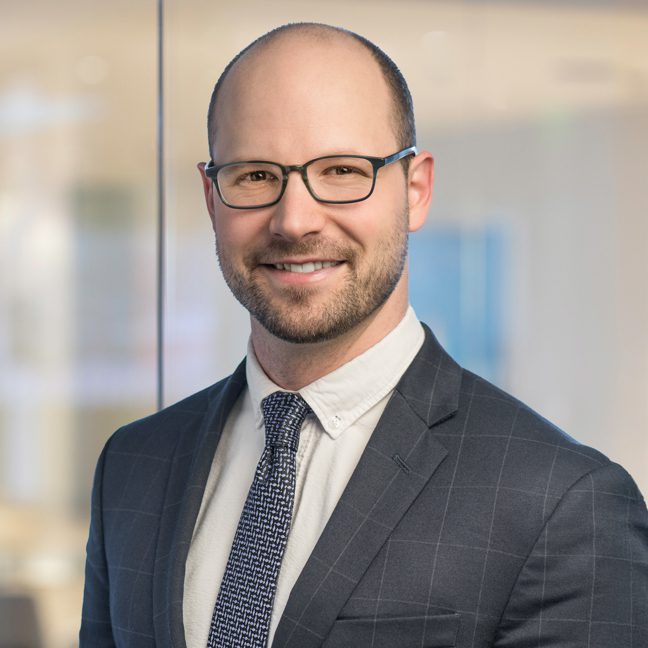
We are excited to announce the addition of six new partners to MTO’s partnership. This includes the addition of Andrew Radsch and the promotions of Nicole Howell, April Hu, Jeremy Kreisberg, Max Rosen and Dane Shikman to partner.
Andrew Radsch
New Intellectual Property Partner

In November 2025, Andrew joined the firm as a partner in our San Francisco office. Andrew is a veteran trial lawyer with nearly two decades of experience handling high-stakes intellectual property litigation and a focus on patents and trade secrets. He has represented clients in complex matters across federal courts nationwide as well as before the Patent Trial and Appeal Board and International Trade Commission. His matters span a wide range of industries and technologies, including network security, wireless communications, cloud computing, streaming media and semiconductors. At MTO, Andrew is drawing on his extensive trial experience and deep technical knowledge to advise clients on their most complex intellectual property disputes. Read the full story.



Recent Alumni in Government and In-House Roles
We congratulate our alumni on their new government and in-house roles and look forward to following their continued impact.



News & Insights
Firm News & Achievements
We are delighted to share some of MTO’s recent client successes and accolades for the important work that we do in the courtroom and the community. To read more, view our news page.